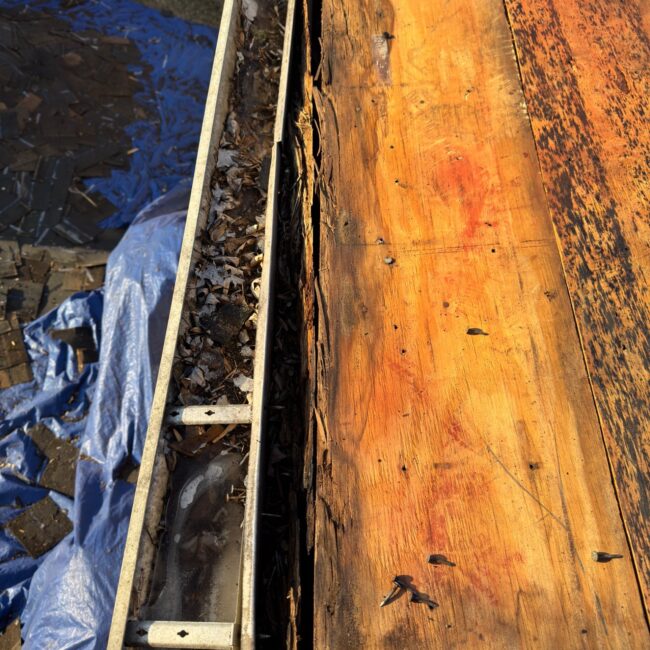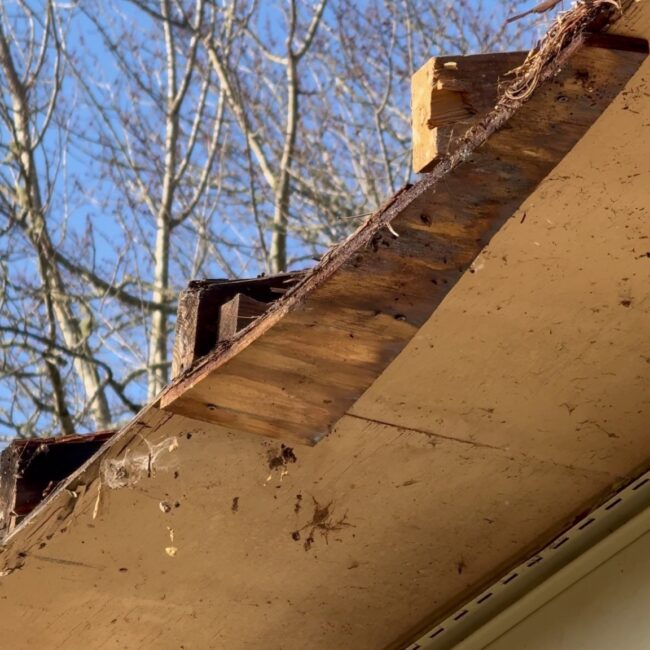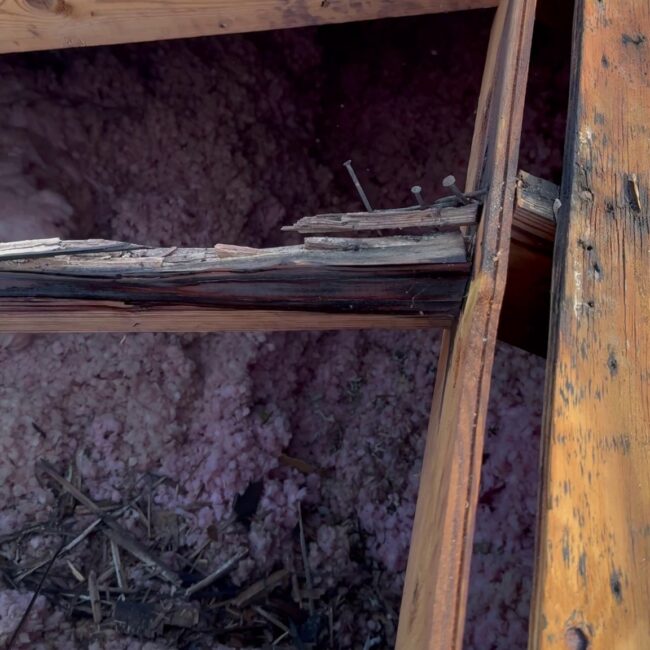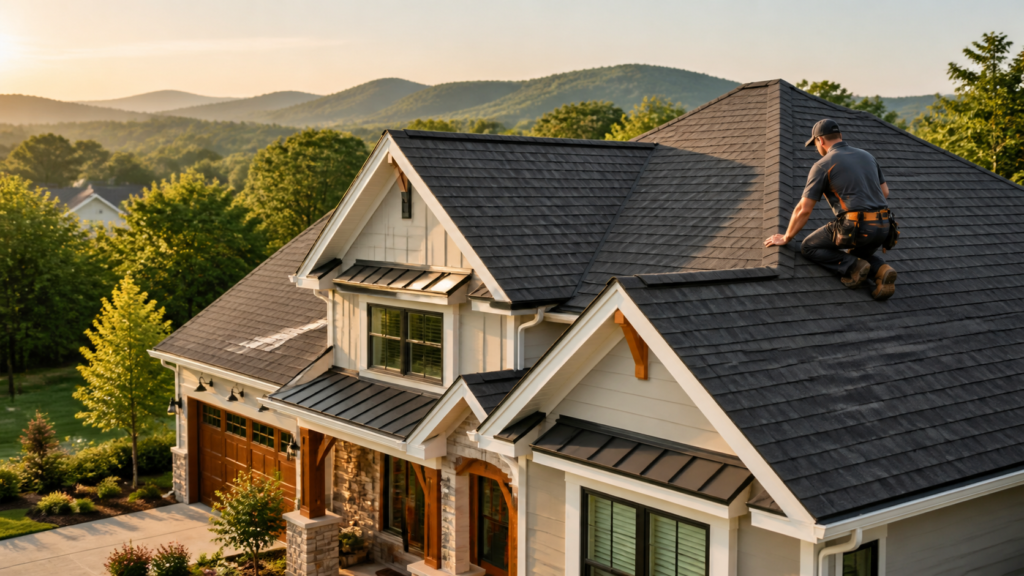
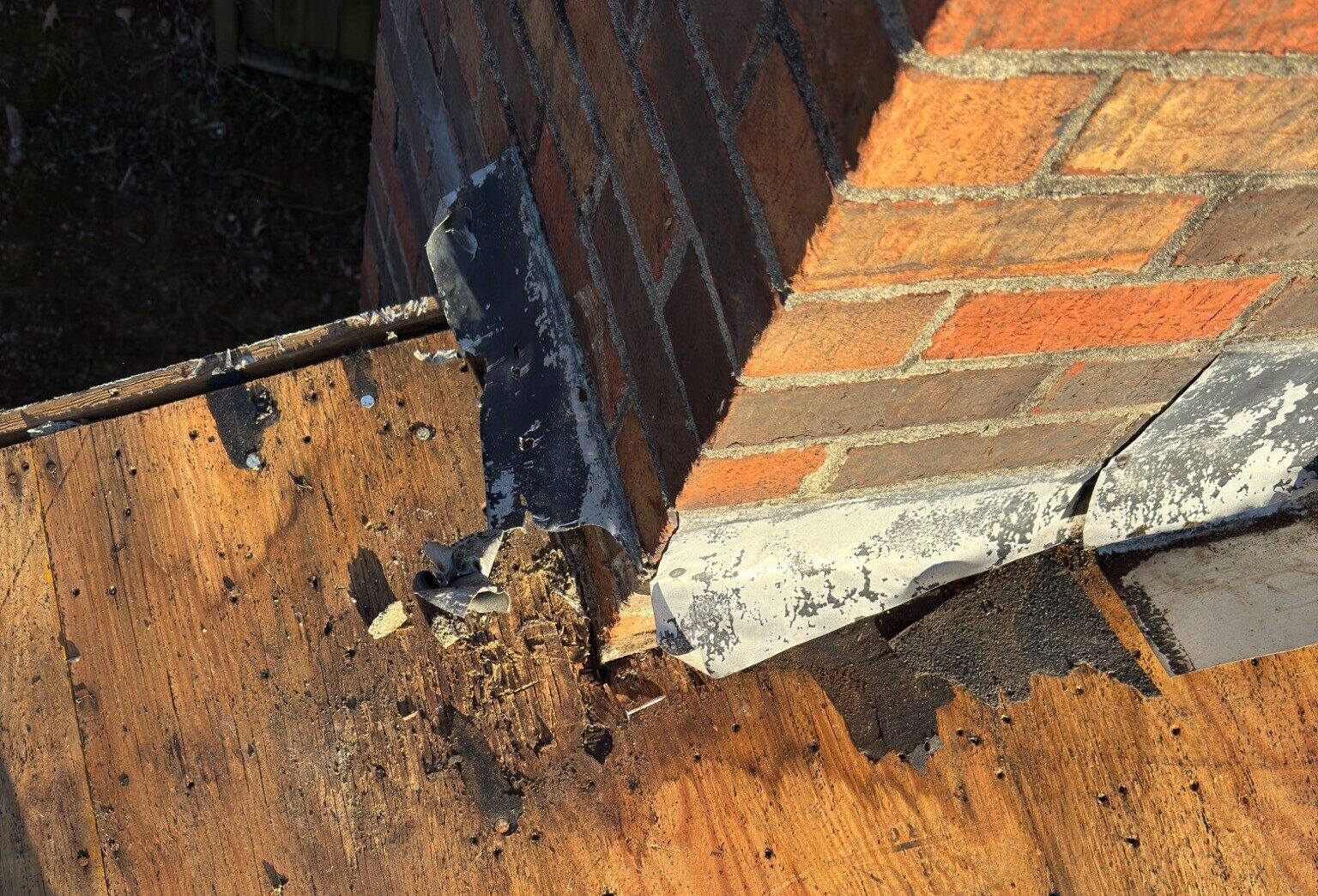
From the ground, this looked like an ordinary roof replacement. Tear-off exposed failed flashing, wet insulation, and rotten decking.
The short answer
Rotten roof decking must be removed—not covered. We stripped the failed assembly, inspected the structure, replaced compromised sheathing, rebuilt chimney flashing and vulnerable transitions, and installed a complete roof system over a solid substrate.
What we found
Rot at the chimney and eaves, soft sheathing near the gutter line, failed flashing, and wet insulation below.
Why it happened
Surface-only chimney metal, water backing up at the edge, aging underlayment, and slow leaks allowed damage to spread quietly.
What we removed
Shingles, old underlayment, and every compromised decking area came off so the structure could be evaluated.
What we rebuilt
New sheathing, true step and counter flashing, targeted membrane, synthetic underlayment, and a complete roofing system.
The Knoxville & East Tennessee lens
Knoxville’s heavy rain and humid conditions can turn a small flashing defect into concealed wood damage. Chimneys, eaves, valleys, and roof-to-wall transitions deserve close inspection during tear-off.
What the work should include
- Complete the tear-off and expose the substrate.
- Inspect rafters, tails, nailers, and surrounding insulation.
- Replace damaged decking with proper fastening.
- Rebuild chimney and transition flashing correctly.
- Install secondary water protection and the complete roof system.
Built Right perspective
Good construction is not a collection of impressive labels or visible finishes. It is a chain of sound decisions, clear documentation, experienced supervision, and accountability for the finished work.
Homeowner questions
Can roofers shingle over soft decking?
They should not. Soft decking cannot hold fasteners reliably and conceals an active structural and moisture problem.
Can rotten decking be seen before tear-off?
Sometimes from the attic or by soft spots, but the full extent is often only visible once shingles and underlayment are removed.
Continue your research
Roofing services · Roofing projects · Remodeling & special projects · About Built Right · Request an estimate
Have a project in the Knoxville area?
Talk directly with Built Right Homes about the condition, scope, and next responsible step.
Request an estimateCall 865-283-4164